

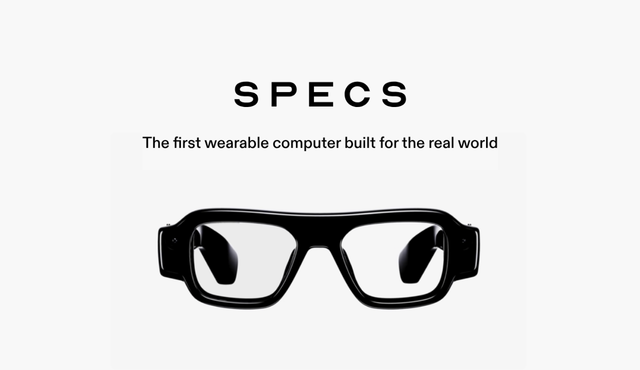
Snap’s new SPECS put augmented reality into a pair of glasses you can pre-order now for $2,195, with shipments expected this fall to the United States, United Kingdom, and France. You get a standalone AR device from Snap Inc. that combines a wide field of view, on-device AI and computer vision, and a developer-forward platform aimed at everyday use.
You’ll learn how SPECS balance wearable comfort with powerful hardware and software, why Snap CEO Evan Spiegel frames this as a step toward more natural computing, and what the price and launch strategy mean for the AR market. Expect details on technical specs, smart features and user experience, developer tools and the Lens ecosystem, and how SPECS position Snap against other spatial-computing efforts.
Key Features and Technical Specifications
These glasses combine lightweight materials, a wide color display, dedicated vision processors, and a multi-charge case to support several hours of mixed use. Expect prescription support, visible recording indicators, and on-device processing designed to keep real‑time AR responsive and private.
Design and Build Materials
You get a frame made from Swiss TR90 polymer that balances durability and low weight. Two frame sizes are offered: a 47 mm model (about 132 g) and a 52 mm model (about 136 g), so you can choose a fit that feels natural for all‑day wear.
Removable prescription inserts let you use your own lenses without compromising the AR optics. An LED indicator clearly signals when cameras or recording are active. The electrochromic lenses tint from clear to shaded in roughly 10 seconds, helping manage glare and privacy without swapping physical sunglasses.
Snap designed the glasses as a fully standalone wearable computer — no external puck or tether — to keep your movement unencumbered while wearing them.
Display and Optics
The display uses a proprietary liquid‑crystal‑on‑silicon system that delivers a 51‑degree field of view and a 16‑million‑color palette. That field of view places large virtual windows into your environment: Snap compares the experience to a 24‑inch monitor nearby or a very large screen at a distance.
Waveguide optics incorporate billions of nanostructures to couple and guide light into your eyes. That approach aims to preserve a clear see‑through view while overlaying vivid digital content. Snap cites technology lineage similar in materials engineering to Boeing 787 Dreamliner window technology to emphasize quality and electrochromic control.
The optical stack prioritizes a seamless view of the world, reducing visible artifacts and making AR overlays appear anchored to real objects and surfaces.
Core Hardware and Performance
SPECS are built as a wearable computer with dual Snapdragon processors: one dedicated to computer vision and the other to running AR applications and Lenses. This split enables low latency hand tracking and real‑time scene understanding without relying heavily on cloud processing.
Motion‑to‑photon latency measures around 7 milliseconds in Snap’s robotic tests, which helps virtual objects remain stable during head and hand movement. On‑device processing handles most vision and AI tasks to limit data sent off‑device and to speed responses.
Developers can run native code via a new SDK and Lens Studio tools, and the glasses support spatial APIs for anchoring content. You should expect robust graphics for AR Lenses, plus audio and Bluetooth connectivity for notifications and media.
Battery Life and Charging
You can expect up to four hours of mixed‑use battery life for tasks that include audio/video playback, Lenses, AI assistance, and Bluetooth notifications. Mixed‑use estimates combine intermittent display use with background sensors and system services.
The included charging case supplies four additional full charges, extending total mixed‑use availability to roughly 20 hours while on the go. The case both stores and powers the glasses; you charge the case separately to replenish multiple charges for mobile use.
Battery performance will vary with display brightness, continuous AR rendering, camera activity, and use of AI features. Snap emphasizes on‑device efficiency, but heavy continuous video capture or prolonged high‑brightness playback will reduce runtime.
Smart Capabilities and User Experience
SPECS aim to insert useful digital tools into your everyday environment while keeping interactions natural and private. You’ll get a mix of spatial displays, real-time AI help, and precise sensing that work together to reduce friction and keep information contextual.
Spatial Computing for Daily Life
Spatial computing turns parts of your environment into functional interfaces. You can pull up a private, high-resolution screen that appears like a 24-inch monitor for documents or a large cinema-size display for media without taking out your phone. The display supports full-color overlays and spatially anchored UI, so directions, measurements, or instructions stay fixed to real-world objects as you move.
For work and play, that means you can stream a video, cast a whiteboard, or overlay step-by-step guidance on a physical project. Developers can build SPECS Lenses in Lens Studio to place interactive elements on surfaces — for example, an overlay that labels machine parts or a drum-teaching Lens that shows tempo and fingering cues directly on your kit. The spatial approach reduces context switches and keeps your hands free.
AI Assistance and On-Device Processing
SPECS provide contextual AI assistance that reacts to what you see and do. The system runs many tasks locally, limiting unnecessary cloud uploads. On-device processing handles sensitive vision tasks and basic AI features, while secure sync or cloud options exist for heavier models you choose to enable.
You can ask for contextual help—translating signs, getting quick measurements, or receiving stepwise repair instructions—without pulling out another device. Privacy controls let you choose what data the glasses retain, and an LED indicates active recording or capture. This combination of local inference and optional cloud services balances responsiveness, functionality, and user control.
Hand Tracking and Computer Vision
Precise hand tracking and computer vision enable natural, touchless interaction. The glasses use dedicated vision processors to detect gestures, hand position, and object geometry with low motion-to-photon latency, helping virtual content feel anchored and responsive. That responsiveness matters for tasks like manipulating a virtual slider or placing a measurement marker in space.
Computer vision also powers scene understanding: object recognition, depth estimation, and spatial mapping. Those capabilities let Lenses augment specific items (like tools or instruments) and maintain alignment as you move. Verified latency figures and sensor fusion reduce drift and jitter, which improves usability when you rely on AR overlays for navigation or repair tasks.
Developer Ecosystem and Software Innovation
Snap built a full-stack developer environment that lets you move from prototypes to native experiences, adds AI-assisted coding, and provides performance benchmarks and APIs to measure spatial fidelity.
Lens Studio and Developer Tools
Lens Studio remains the primary portal for creating AR experiences that run on SPECS and Snapchat.
You can author Lenses with the existing visual tools, plus new APIs for spatial anchors, shared multiplayer state, and optimized rendering for the SPECS waveguide display.
A Native Development Kit (NDK) now lets you drop in native libraries and C/C++ code when you need lower-level control or third‑party SDKs.
That expands possibilities from simple overlays to complex simulation, audio processing, and real‑time collaboration tools that perform on the device’s dual Snapdragon processors.
Lens Studio integrates with Snap’s distribution on Snapchat and SPECS, so you can reach mobile users and wearable owners from the same project.
Snap’s Snap OS updates and developer portals deliver documentation, sample projects, and analytics to help you iterate.
Agentic Development and Migration Agent
Snap introduced agentic development support inside Lens Studio via previews for Claude Code, Codex, and Cursor to accelerate Lens creation.
You can prompt agents to scaffold Lenses, generate shaders, or produce scene logic, then refine outputs within the editor.
The Migration Agent targets teams with existing Spark and earlier SPECS Lenses.
It analyzes Lens projects, flags incompatible APIs, and produces a conversion plan or partial automated code transforms so you won’t have to rewrite large codebases manually.
These tools emphasize speed and safety: agent outputs are intended as editable starting points, while the Migration Agent reports performance and compatibility metrics against the SPECS Spatial Benchmark.
That benchmark helps you validate tracking accuracy, motion-to-photon latency, and multi-user sync before publishing.
Spec OS and Proprietary Technology
Snap OS now underpins SPECS with platform services specifically tuned for spatial computing.
You get on-device AI routing, privacy controls, and an API surface for hand tracking, scene understanding, and persistent anchors.
The OS exposes low‑latency pipelines to both the Lens runtime and native apps, enabling 7 ms motion-to-photon responsiveness when properly optimized.
Snap also ships specialized tools—profilers and the SPECS Spatial Benchmark—to measure field-of-view utilization, color gamut, and computer-vision throughput on real hardware.
Snap’s investments span the augmented reality stack from optics to software, backed by more than 7,000 patents.
You can pre-order devices and access developer resources at SPECS.COM, then target the same Lens ecosystem that integrates with Snapchat for discovery and distribution.
Market Position and Launch Strategy
Snap positions SPECS as a premium, standalone AR product that shifts computing into everyday environments while targeting early adopters, creators, and professionals who value spatial tools and shared experiences. You should expect a high-entry price, staged geographic rollout, and a marketing push tied to cultural figures and developer support.
Pre-Order and Pricing Details
Snap opened pre-orders with a list price of $2,195 and a refundable $200 deposit to reserve units. You pay the deposit online at SPECS.COM to hold your place; full payments are collected closer to shipping.
The price signals a premium positioning that competes with high-end consumer electronics rather than mass-market wearables. Snap promotes features like a 51-degree field of view, dual Snapdragon processors, and a 7 ms motion-to-photon latency to justify the cost to power-users and enterprise pilots.
You should also note the included charging case that extends battery life and removable prescription inserts, which affect total value for people who need optical customization.
Global Availability and Marketing Campaigns
Pre-orders target the United States, United Kingdom, and France first, with shipments expected in the fall following the Augmented World Expo 2026 announcement. You can reserve in those markets initially; broader availability depends on demand and regulatory clearances.
Snap pairs the product launch with a global campaign shot by Steven Meisel featuring cultural figures—Kaia Gerber, Jimmy Butler, Jack Harlow, Imogen Heap, and Hoyeon—to position SPECS as both tech and lifestyle hardware.
You should expect integrated promotion across Snapchat, Bitmoji experiences, and partner channels from Specs Inc. and Saturn teams to drive awareness. The campaign leans on experiential demos at events and developer showcases to convert creators into early adopters.
Competitive Landscape and Industry Impact
SPECS enters a market where Meta’s Reality Labs, established AR headsets, and niche smart-glass makers compete on price, field of view, and software ecosystems. You should compare SPECS’ 51-degree FOV and standalone architecture against tethered headsets and lighter “AI glasses” that prioritize wearability over spatial capability.
Snap’s advantage comes from a decade of AR tooling, Lens Studio developer support, and integrated social features via Snapchat. You should consider how developer momentum, spatial benchmarks, and on-device AI will determine whether SPECS displace single-purpose wearables or mostly attract creators and enterprise trials.
Privacy cues—LED recording indicators and on-device processing—aim to reduce adoption friction in public settings, which matters for mainstream acceptance and regulatory scrutiny.
Snap’s SPECS represent a genuine step forward for consumer AR — not a concept or a dev kit, but a standalone device with real specs, a real price tag, and a real release window. The 51-degree field of view, 7ms latency, dual Snapdragon processors, and on-device AI put this in a different category from the AI glasses that have come before it.
At $2,195, it’s a meaningful investment. But if you’re the type of person eyeing a pre-order, you probably have older tech sitting around that could offset that cost. Smartphones, tablets, smartwatches — devices you’ve already moved on from mentally are worth real money right now, before the fall launch cycle pushes trade-in values down. Get a free instant quote at gizmogo.com, ship your old device for free, and get paid fast. Your next upgrade is closer than you think.