

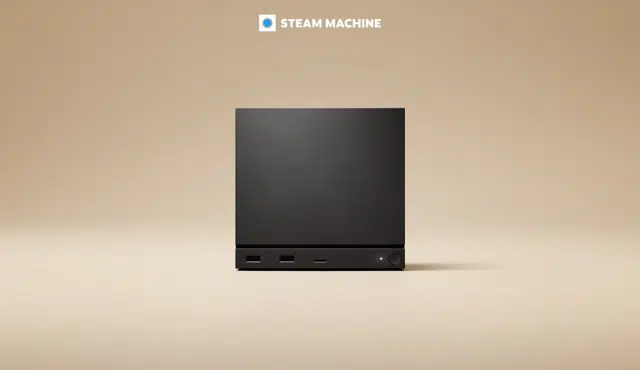
Valve has locked in a summer 2026 launch window for the Steam Machine, and mounting rumors point to a starting price near $1,200. You can expect the Steam Machine to arrive between late June and September 2026, with current reports suggesting a higher‑than‑expected price around $1,200 due to rising component costs.
After an earlier delay that pushed plans out of early 2026, Valve confirmed the updated timeline in a developer post outlining its expanded Verified program for the new gaming PC hardware. Reports from outlets like XDA’s coverage of Valve’s summer 2026 confirmation show that while you don’t have an exact release date yet, the launch window is official.
You also need to weigh what that rumored $1,200 entry price could mean for performance, specs, and overall value. As Valve prepares this console‑style gaming PC for release, understanding the hardware, software support, and positioning in today’s PC market will help you decide whether to wait, upgrade, or invest elsewhere.
Official Release Window and Pricing Details
Valve has narrowed the Steam Machine release window to summer 2026 while keeping the final retail price under wraps. At the same time, reports point to a starting price near $1,200, placing the system closer to high-end gaming PCs than traditional consoles.
Valve’s Summer 2026 Launch Window
Valve confirmed that the Valve Steam Machine will ship in summer 2026. Multiple outlets report the company publicly reaffirmed that timeline, including coverage noting the hardware is shipping this summer.
Earlier projections pointed to early 2026, but Valve has now clarified the broader steam machine release window as summer. IGN also reported that the Steam Machine is still coming this summer, according to Valve, reinforcing that the company has not delayed the device beyond 2026.
Valve continues expanding its Verified programs to include new Steam hardware categories. That move signals software readiness and compatibility testing, which matters if you plan to rely on seamless access to your existing Steam library at launch.
Price Rumors and Comparison With Steam Deck
Valve has not confirmed the official steam machine price. However, analysts cited in coverage suggest the system could start around $1,200, as detailed in reporting that experts think it could start at USD 1,200.
At that level, you are looking at a device positioned far above the Steam Deck price range. The Steam Deck remains significantly cheaper, even after past pricing adjustments and regional variations.
A $1,200 starting point places the Steam Machine closer to compact gaming PCs built with modern PC components. Unlike the handheld Deck, this system targets desktop-class performance and living-room setups rather than portability.
Preorder Availability and Distribution Plans
Valve has not announced a specific preorder date. You should expect preorders to open closer to the confirmed summer launch window rather than months in advance.
The company’s approach resembles prior Steam hardware rollouts, where availability often scales gradually. Early units may prioritize direct sales through Steam, followed by broader distribution.
Third-party manufacturers could also play a role. Earlier Steam Machine efforts included partners like Alienware, and similar collaborations remain possible if Valve licenses hardware designs or works with OEMs for distribution.
If you plan to buy at launch, monitor Steam announcements closely. Initial stock may move quickly, especially if supply aligns with custom PC components rather than mass-produced console hardware.
Market Position vs. PlayStation 5, Xbox Series X, and Gaming PCs
At a rumored $1,200 starting price, the Steam Machine sits well above the PlayStation 5 and Xbox Series X, both of which retail for significantly less. That difference changes your comparison criteria.
Instead of competing directly on price, Valve positions the device closer to prebuilt gaming PCs. You gain access to the broader Steam ecosystem, mod support, and flexible PC settings rather than a closed console platform.
Compared with building your own system, the Steam Machine could simplify setup. You would not need to select individual PC components, yet you would still operate within a PC-based environment.
This strategy places the Steam Machine between traditional consoles and high-end gaming PCs. If you value console-style convenience with PC-level flexibility, that hybrid position defines its market role in 2026.
Key Hardware Specs, Features, and Software
Valve positions this Steam Machine as a compact but capable mini gaming PC built for 4K play and tight integration with SteamOS. You get modern AMD silicon, fast DDR5 memory, NVMe storage, and broad controller and VR support in a living room–friendly chassis.
Processor, GPU, and Memory Specifications
At the core, you run a semi-custom AMD Zen 4 CPU with 6 cores and 12 threads, boosting up to 4.8 GHz at a 30W TDP. This places it closer to efficient desktop-class AMD Ryzen chips than to low-power ARM designs, which matters for modern AAA games and background tasks.
Graphics come from a semi-custom AMD RDNA3 GPU with 28 compute units and a 110W TDP. Valve states it supports 4K at 60 FPS with FSR and hardware ray tracing, and IGN details the full configuration in its report on the next-gen Steam Machine full specs.
Memory configuration includes:
- 16GB DDR5 RAM
- 8GB GDDR6 VRAM
The split between system RAM and dedicated GDDR6 VRAM gives you predictable gaming performance compared to unified memory systems. For most 1440p and 4K titles with upscaling, 16GB DDR5 remains a practical baseline in 2026.
Storage, Connectivity, and Expansion Options
Valve offers two NVMe SSD configurations: 512GB NVMe and 2TB NVMe SSD models. The base 512GB NVMe suits a focused library, but modern game installs often exceed 100GB, so the 2TB option provides breathing room.
You also get a microSD slot for expanded storage, though NVMe remains faster for demanding titles. Ports include:
- DisplayPort 1.4 (up to 4K at 240Hz or 8K at 60Hz)
- HDMI 2.0 (up to 4K at 120Hz)
- USB-C 3.2 Gen 2 (10 Gbps)
- Multiple USB-A 3.2 and USB 2.0 ports
- Gigabit Ethernet
- 2×2 Wi‑Fi 6E with dedicated Bluetooth antenna
The integrated 2.4GHz radio supports the Steam Controller directly. This layout lets you treat the Steam Machine like a small desktop PC while keeping it optimized for TV setups.
SteamOS Versus Windows and Linux Gaming
The Steam Machine runs SteamOS, Valve’s Linux-based operating system tuned for controller navigation and fast suspend/resume. You boot directly into a console-style interface instead of a traditional Windows desktop.
SteamOS relies on Proton to translate Windows game calls into Linux-compatible instructions. For most major titles, compatibility remains strong, but niche anti-cheat systems can still cause issues.
You can compare broader hardware positioning in coverage such as the Steam Machine early 2026 specs and OS features. Unlike a standard Windows gaming PC, you do not pay for a Windows license, and you avoid background bloat. However, if you prefer native Windows apps or specific launchers, a traditional Windows build still offers more flexibility.
Linux users will appreciate the open foundation, while console-oriented players will value the streamlined interface.
Ecosystem Features: Steam Controller, Steam Frame, and VR Headset Compatibility
Valve builds this system around a broader hardware ecosystem. The Steam Machine ships bundled with the updated Steam Controller in some configurations and also supports standalone sales.
The new controller offers:
- Proprietary low-latency wireless (~8ms end-to-end)
- Bluetooth support
- Magnetic thumbsticks
- HD haptics and capacitive grip inputs
The Steam Machine also integrates with Steam Frame and Valve’s VR efforts. It supports common PC VR headsets through DisplayPort and USB, and it fits into Valve’s push toward a unified living room and VR setup, as detailed in reporting on the Valve Steam Machine full specs and hardware lineup.
If you follow industry leaks from figures like Brad Lynch, you already know Valve continues investing in VR headset development. This hardware configuration gives you enough CPU and GPU headroom for entry-level to mid-range PC VR without moving to a full tower PC.