

When you compare an old PC to a modern system, you quickly notice how much personal computing has changed in power, size, and everyday use. Over the past few decades, hardware has shifted from bulky beige towers to compact, high‑performance machines, as shown in this look at 30 years of PC progress.
Modern PCs outperform older systems in speed, efficiency, features, and overall user experience while costing less for the same level of performance. You benefit from faster processors, solid‑state storage, improved graphics, and built‑in connectivity that older machines often lacked or required as add‑ons.
You also see how these differences shape the way you work, play, and stay connected. From performance gains highlighted in discussions like old supercomputer vs modern PC comparisons to today’s expectations for portability and multitasking, your experience with a computer now reflects decades of steady, practical improvement.
Comparing Performance, Features, and User Experience
When you compare an older PC to a modern system, you notice clear differences in speed, physical design, connectivity, and data management. These changes affect how you work, play, and interact with other devices every day.
Processing Power and Hardware Evolution
Older desktop PCs from the early 1990s relied on single-core processors with a few million transistors and clock speeds measured in tens of megahertz. For example, Intel’s early Pentium chips ran at 60 MHz and contained just over 3 million transistors, a sharp contrast to today’s multi-core CPUs with vastly greater internal cache and parallel processing capabilities, as outlined in this review of 30 years of PC progress.
Modern processors in your desktop or laptop typically feature multiple cores, higher clock speeds around 4–5 GHz, and advanced instruction handling. They also integrate AI acceleration features that support tasks like image recognition, background noise removal, and real-time language translation.
You also benefit from faster memory. Systems that once struggled with 8–32 MB of RAM now ship with 16–32 GB as standard, enabling smoother multitasking across browsers, design tools, and AI-powered apps. Even your smartphone can outperform many early PCs in raw processing power.
Design, Aesthetics, and Portability
Older PCs often came in large beige towers with matching CRT monitors. Manufacturers followed a similar template, and customization options were limited.
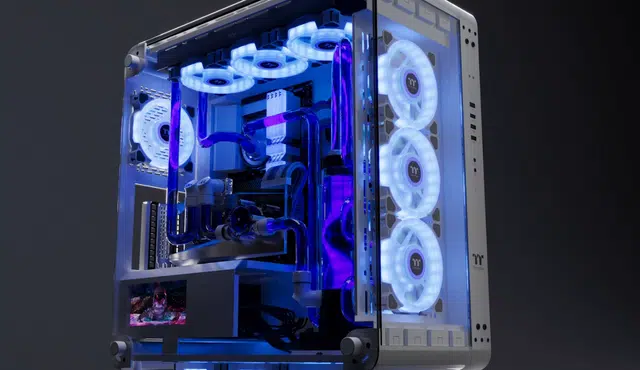
Today, you can choose from compact desktops, ultra-thin laptops, gaming towers with tempered glass panels, and small form factor systems. The shift from bulky designs to diverse form factors reflects broader industry changes documented in discussions about how 30 years of PC progress changed design and capability.
Portability has also improved. Modern laptops weigh far less, use solid-state drives instead of mechanical disks, and rely on energy-efficient processors. At the same time, smartphones and tablets now handle tasks that once required a full desktop, including video editing and document collaboration.
You trade some upgrade flexibility for thinner builds, especially in modern ultrabooks. However, you gain quieter operation, longer battery life, and better displays with high resolutions and accurate color reproduction.
Internet Connectivity and Communication Changes
In the early days, you connected to the internet using dial-up modems with limited bandwidth. Online activity focused on email and simple websites.
Modern PCs integrate high-speed Wi-Fi, Bluetooth, and Ethernet as standard features. Operating systems now manage drivers and device configuration automatically through plug-and-play standards like USB and PCIe, reducing the manual setup that once frustrated users, as described in this overview of software and usability improvements over time.
You now rely on constant internet access for video conferencing, cloud-based collaboration, and streaming. AI-driven services process voice commands, filter spam, and enhance video calls in real time.
Communication has expanded beyond the desktop. Your laptop, smartphone, and even smartwatch sync notifications and messages instantly, creating a connected ecosystem rather than a single standalone machine.
Storage Solutions and Cloud Adoption
Older PCs depended on floppy disks and small-capacity hard drives. In the mid-1990s, a few hundred megabytes of storage felt generous, and operating systems required only tens of megabytes to install.
Modern systems use solid-state drives measured in terabytes, offering faster boot times and near-instant file access. Operating systems now require tens of gigabytes of space, reflecting increased complexity and expanded feature sets noted in historical comparisons of Windows storage growth and system demands.
You also store data beyond your physical device. Cloud storage services sync documents, photos, and backups across your laptop, desktop, and smartphone. This approach reduces reliance on local hardware and supports remote work.
As AI tools analyze documents, images, and usage patterns in the cloud, your PC becomes part of a larger computing network rather than a self-contained box under your desk.
Impact on Lifestyle, Work, and the Future of Computing
Old PCs introduced digital productivity into your home and office, but modern systems integrate gaming, cloud software, AI tools, and specialized hardware into nearly every part of your daily routine. You now rely on your computer not just for documents, but for entertainment, remote work, health tracking, scientific research, and energy management.
Gaming and Entertainment Advancements
Early PCs handled simple 2D games with limited sound and basic graphics. You installed titles from floppy disks or CDs, and hardware upgrades often meant swapping out RAM or graphics cards just to meet minimum requirements.
Modern PCs deliver real-time ray tracing, high refresh rates, and large open-world games that stream assets dynamically. GPUs now support AI-driven upscaling and frame generation, which improves performance without demanding equivalent raw power.
Online multiplayer gaming has also reshaped how you interact. High-speed internet and integrated voice chat let you compete globally instead of locally.
The broader shift from early PC entertainment to today’s immersive systems reflects decades of hardware and user experience progress described in the evolution of personal computing technology. You now treat your PC as a gaming console, streaming device, and media production studio in one machine.
Software Ecosystem, Apps, and Operating Systems
Old PCs relied on standalone software installed from physical media. Updates were manual, and compatibility issues were common between operating systems and hardware.
Today, your operating system manages automatic updates, driver optimization, and cloud synchronization. Windows, macOS, and Linux ecosystems support app stores, subscription software, and browser-based platforms that reduce dependency on local storage.
You also use AI-powered tools for writing, coding, editing, and data analysis. These tools combine local processing with cloud computing, which expands what your PC can do without constant hardware upgrades.
The long-term transformation of PCs into essential productivity hubs reflects how the personal computer became central to communication and work, as outlined in the personal computer revolution timeline. Your workflow now blends desktop applications, mobile apps, and web services into a single digital environment.
Influence on Science, Health, and Energy Sectors
Early PCs played a limited role in research due to low processing power and memory constraints. Scientific institutions depended on large mainframes or specialized systems for advanced simulations.
Modern PCs support complex modeling, genomic analysis, and AI-assisted diagnostics. Researchers use high-performance desktops and workstations to simulate climate systems, study disease patterns, and analyze space mission data.
Healthcare professionals now rely on PCs for imaging software, electronic health records, and telemedicine platforms. You also benefit directly from wearable health data that syncs with desktop dashboards for deeper analysis.
Advances in computing research continue to push boundaries in performance and efficiency, as explored in discussions about modern computing vision and challenges. Energy-efficient chips and optimized architectures reduce power consumption while increasing output, which matters in both data centers and home offices.
Role of Reviews and Consumer Expectations
In the early PC era, you relied on print magazines and limited word of mouth to guide purchases. Hardware cycles moved slowly, and expectations centered on basic reliability and compatibility.
Today, you expect transparent benchmarks, thermal testing, battery performance data, and AI capability comparisons. Online reviews shape buying decisions within days of a product launch.
The conversation around whether traditional desktops will decline in favor of compact and portable systems reflects changing work habits and remote setups, highlighted in discussions about the future of desktop PCs in 2025. You now prioritize portability, upgrade paths, sustainability, and long-term software support.
Consumer expectations also extend to resale value and device lifecycle. As technology evolves faster, you evaluate not just performance, but how long your PC will remain relevant in a market driven by rapid AI and hardware innovation.