

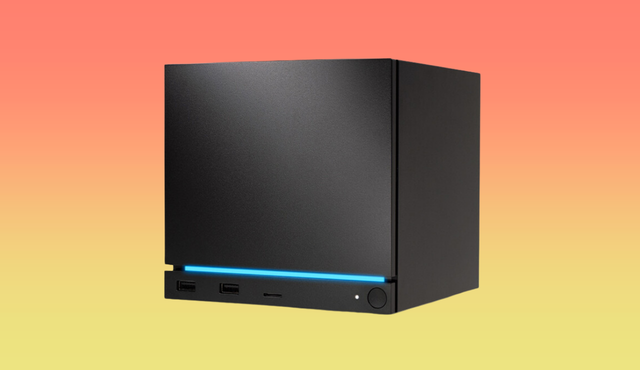
Specification | Steam Machine |
CPU | AMD Zen 4, 6 cores / 12 threads pcgamer+1 |
GPU | Semi-custom AMD RDNA 3, 28 compute units pcgamer+1 |
VRAM | 8GB GDDR6 pcgamer+1 |
System memory | 16GB DDR5 pcgamer+1 |
Storage options | 512GB or 2TB NVMe SSD pcgamer+1 |
Expandability | microSD card support pcgamer+1 |
Wireless | Wi‑Fi 6E, Bluetooth pcgamer+1 |
Wired networking | Gigabit Ethernet pcgamer+1 |
Video output | HDMI 2.0, DisplayPort 1.4 pcgamer+1 |
USB ports | USB-C 3.2 Gen 2, USB-A 3.2 Gen 1, USB-A 2.0 pcgamer+1 |
Operating system | SteamOS 3 engadget |
Launch date | June 30, 2026 gematsu |
Starting price | $1,049 theverge+1 |
Valve has officially pulled back the curtain on its new Steam hardware, giving you concrete details on price, specs, and launch timing. The Steam Machine starts at $1,049, launches June 30, 2026, and delivers significantly more power than the Steam Deck in a console-style PC format.
You now know exactly what to expect in terms of configurations, including 512GB and 2TB models, controller bundles, and how reservations work. Valve also outlines why pricing landed above early expectations and how component costs shaped the final numbers.
If you want to understand how this system fits into Valve’s broader ecosystem alongside the Steam Deck—and what kind of performance and flexibility you actually get—everything you need is ahead.
Steam Machine Models, Pricing, and Reservation Process
Valve offers two core configurations with clear pricing and a structured reservation system. You can choose storage capacity, secure your unit ahead of launch, and review what comes in the box before release.
Model Variants and Pricing Breakdown
Valve confirmed two primary options for launch: a Steam Machine 512GB model and a Steam Machine 2TB model. Both ship with identical core hardware, with storage capacity as the key difference.
The company set the Steam Machine price at $1,049 for the 512GB model and $1,428 for the 2TB model, with a confirmed June 30, 2026 Steam Machine release date. You pay a premium for expanded internal storage, which benefits large game libraries and high-resolution assets.
Earlier coverage also noted that pricing starts at $1,049, reinforcing Valve’s positioning of the device above traditional consoles and closer to premium PC hardware, as reported in this overview of the Steam Machine price and pre-orders.
If you install many AAA titles or rely on local storage instead of cloud downloads, the 2TB model reduces the need for external drives. If you rotate games frequently, the 512GB model may meet your needs at a lower upfront cost.
Reservation Requirements and Pre-Order Details
Valve opened a structured reservation system ahead of launch to manage demand. You must place a reservation before completing a full pre-order, which helps limit scalping and automated bulk purchases.
Reports confirm that Valve is using a controlled rollout for the 2026 launch, including multiple configurations and reservation safeguards, as outlined in coverage of the four Steam Machine variants and reservation system.
You secure your place in line first, then finalize your purchase closer to shipment. This approach gives you time to confirm your chosen configuration, including whether you want the Steam Machine 512GB or Steam Machine 2TB.
Valve tied reservations directly to your Steam account, which helps verify purchase eligibility. You should monitor your account notifications and payment method status to avoid delays before the official Steam Machine release.
Included Bundles and Customization Options
Each unit includes essential accessories, with optional upgrades available at checkout. The standard controller bundle typically features a Steam Controller and necessary cables.
Some listings reference accessories such as a Steam Controller wireless adapter, depending on region and package selection. You should confirm what your selected bundle includes before finalizing your pre-order.
Valve also supports cosmetic customization through interchangeable faceplates. These allow you to personalize the exterior without modifying internal components.
You can pair additional controllers for local multiplayer and expand storage later with compatible drives. While the base hardware remains fixed between the 512GB model and 2TB model, storage and accessories give you practical flexibility.
Technical Specifications and Features
Valve builds the Steam Machine around a semi-custom AMD platform with Zen 4 and RDNA 3 architecture. You get modern memory, fast NVMe storage, broad connectivity, and full SteamOS 3 integration in a compact gaming PC form factor.
Core Hardware and Performance
Valve uses a semi-custom AMD processor that pairs an AMD Zen 4 6-core, 12-thread CPU with a semi-custom RDNA 3 GPU. The CPU design aligns with the Zen 4 generation found in chips like the Ryzen 5 7600, delivering strong single-thread and multi-thread performance for modern titles.
The integrated RDNA 3 GPU features 28 compute units, giving you performance that targets smooth 1080p and 1440p gameplay. It supports hardware-accelerated ray tracing and modern graphics APIs, putting it in direct competition with consoles such as the PS5 and Xbox Series X.
You also benefit from AMD FSR upscaling, which helps increase frame rates without requiring native high resolutions. When paired with FreeSync-compatible displays, the system reduces screen tearing and improves motion clarity.
The hardware sits inside a compact chassis measuring roughly six inches on each side, making it easy to place near your TV or monitor without the footprint of a full tower gaming PC.
Storage, Memory, and Expandability
Valve equips every model with 16GB of DDR5 memory, ensuring fast data access and improved bandwidth over DDR4. The GPU includes 8GB of GDDR6 VRAM, which supports modern texture sizes and higher-resolution assets.
You can choose between a 512GB NVMe SSD or a 2TB NVMe SSD, depending on how large your Steam library is. NVMe storage reduces load times and improves system responsiveness compared to traditional SATA SSDs.
If you need more space, the system includes a microSD card slot for expandable storage. This option works well for smaller or less demanding titles, while you keep larger games on the internal NVMe drive.
The higher-capacity bundle also includes a Steam Controller and additional cosmetic faceplates, but both hardware configurations share the same internal performance components.
Connectivity and Ports
The Steam Machine supports Wi-Fi 6E, Bluetooth 5.3, and Gigabit Ethernet, giving you flexible networking options. You can connect wirelessly for convenience or use wired Ethernet for lower latency during competitive play.
On the display side, you get HDMI 2.0 and DisplayPort 1.4 outputs. These ports support high refresh rates and adaptive sync through FreeSync on compatible monitors and TVs.
For peripherals, the system includes a mix of USB-C 3.2 Gen 2, USB-A 3.2 Gen 1, and USB-A 2.0 ports. You can connect external drives, keyboards, mice, VR accessories, and charging cables without relying on adapters.
An integrated wireless adapter supports the Steam Controller out of the box. This setup keeps your living room clean while maintaining low input latency.
Operating System and Ecosystem Integration
The Steam Machine runs SteamOS 3, Valve’s Linux-based operating system optimized for gaming. It uses a KDE Plasma desktop environment under the hood while presenting a console-style interface for TV use.
You get direct access to your Steam library, cloud saves, remote play, and fast suspend and resume features. The interface focuses on controller navigation, but you can switch to desktop mode for traditional PC tasks.
Compatibility relies on Valve’s Proton layer, which allows you to run many Windows games without manual configuration. You can also install third-party software, making the system function as a full compact gaming PC rather than a closed console.
This approach blends console simplicity with PC flexibility, giving you more control over how you play and manage your games.
The Steam Machine looks like one of the most ambitious gaming hardware releases in years, but that premium price may push some buyers to rethink their upgrade budget. If you’re ready to move on from an older console, selling it to Gizmogo can help turn unused hardware into cash you can put toward the Steam Machine. It’s a simple way to offset the cost, clear out space, and make the jump to Valve’s new living-room PC a little easier.