

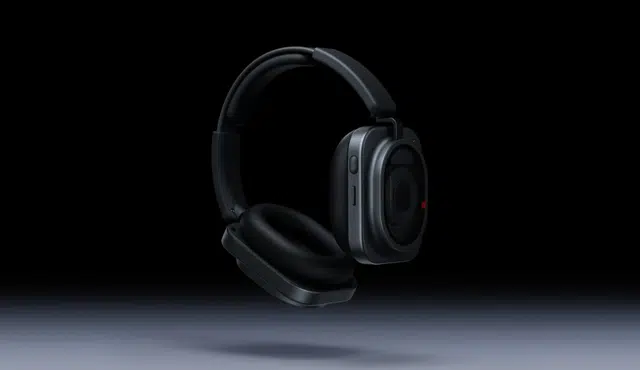
Nothing just put a $399 price tag on its most ambitious headphone yet, and that number changes the math for anyone still wearing a three or four-year-old pair. The Headphone (1) Pro brings a titanium-and-aluminum build, a triple-driver sound system, and noise cancellation that Nothing rates at up to 46 dB, according to the official Headphone (1) Pro product page.
The Headphone (1) Pro earns its $399 price for buyers who want a distinctive design and deep sound customization, though Sony and Bose still edge it out on outright noise cancellation. That verdict matters most if you’re sitting on a pair of Sony WH-1000XM5, Bose QuietComfort 45, or AirPods Max headphones that are quietly losing resale value every month.
This is as much a buying decision as a selling one. Waiting to trade in an older pair usually means a lower payout, while jumping on the Headphone (1) Pro without a plan for your current set leaves cash on the table.
Is the Headphone (1) Pro Worth $399?
The Headphone (1) Pro costs $399, positioning it below the Apple AirPods Max 2 at $549, the Sony WH-1000XM6 at $450, and the 2nd-Gen Bose QuietComfort Ultra at $449, according to CNET’s hands-on review. That makes it Nothing’s most expensive headphone yet, and also its most capable, with a redesigned build, a triple-driver sound engine, and adaptive noise cancellation that improves noticeably over the original Headphone (1).
What Do the Titanium, Aluminum, and Glass Add to the Design?
The Headphone (1) Pro swaps translucent plastic for machined aluminum and a titanium alloy, with new arms that are 45% lighter than the original Headphone (1), according to the product page. Each earcup carries a glass window over 9H Panda Glass, letting you see the triple-driver architecture inside.
Trusted Reviews called it Nothing’s best-looking headphone yet, noting the glass panel has more visual depth than any of Nothing’s earlier transparent designs, according to Trusted Reviews’ testing. The ear cushions are 50% softer than on the original Headphone (1) and adapt better to glasses, with a 10% wider headband and 12% thicker padding reducing pressure on top of your head.
That comfort upgrade comes with a small caveat. Trusted Reviews found the added weight from the metal chassis meant the volume roller could brush against a shoulder and adjust itself when the headphones hung around the neck, something that didn’t happen with the lighter Headphone A.
How Do the Triple Drivers and Noise Cancellation Perform?
The triple-driver setup pairs a 40mm dynamic driver for bass with a separate midrange driver and a solid-state xMEMS driver for treble, a layout The Verge pointed out as a real departure from the single-driver designs used in the Sony XM6, AirPods Max 2, and Bose Ultra Headphones, according to The Verge’s review. Splitting frequencies across three drivers lets each one focus on its own range, which sharpens the attack on higher notes.
Nothing rates the noise cancellation at up to 46 dB using a 10-microphone system, and claims it beats the original Headphone (1) by about 5 dB on average, per the company’s own specs. CNET’s testing told a slightly different story: the AirPods Max 2 muffled a rumbling HVAC unit about 10% more effectively, and the Sony XM6 and Bose QuietComfort (2nd Gen) also edged out the Nothing in that same test.
The Verge reached a similar conclusion, ranking the Headphone (1) Pro just behind “the current top three” of the Sony XM6, Bose Ultra Headphones Gen 2, and AirPods Max 2, while still calling it the best ANC Nothing has ever shipped. Battery life sits at up to 30 hours with ANC on and 68 hours with it off, according to the official specs, which CNET noted matches the Sony XM6’s ANC-on runtime but trails the AirPods Max 2 by roughly 6 hours in the same mode.
How Does It Compare with Sony and Bose?
CNET’s reviewer preferred the tonal balance of the Sony WH-1000XM6, describing it as warmer and less aggressive than the Nothing’s more forward, exciting sound signature. That’s a subjective call, and the Headphone (1) Pro’s deep EQ customization, including a Flat EQ hardware switch built with Metropolis Studios, gives you room to dial the sound toward your own preference in a way Sony and Bose don’t match.
Here’s how the specs and observed performance stack up:
| Nothing Headphone (1) Pro | Sony WH-1000XM6 | Bose QuietComfort Ultra (2nd Gen) |
Price | $399 | $450 | $449 |
Driver design | Triple driver | Single driver | Single driver |
ANC rating (claimed) | Up to 46 dB | Not disclosed here | Not disclosed here |
ANC real-world ranking | Just behind top tier | Top tier | Top tier |
Battery (ANC on) | Up to 30 hrs | Matches Nothing | Not disclosed here |
EQ customization | Advanced + Flat EQ switch | Standard app EQ | Adjustable EQ |
The Verge’s reviewer also flagged that Flat EQ is a niche feature. Most listeners prefer a curve with boosted bass and slightly lifted highs, the so-called Harman Curve research from Dr. Sean Olive at Harman, rather than a completely neutral response.
Who Should Upgrade—and Who Should Keep Their Current Pair?
Anyone who values a unique design and wants deep control over EQ and spatial audio gets real value from the Headphone (1) Pro. It suits listeners upgrading from an older Nothing Headphone (1) or Headphone A, and it appeals to Nothing Phone owners who want matching hardware and app integration.
If pure noise cancellation is your top priority, the Sony XM6 or Bose Ultra Headphones Gen 2 still lead, based on both CNET’s and The Verge’s side-by-side testing. Buyers already happy with a Sony WH-1000XM5 or Bose QuietComfort 45 don’t gain much by switching, since the Pro’s ANC advantage over older flagships isn’t dramatic enough to justify the cost alone.
Should You Sell Your Current Headphones Before Upgrading?

Selling your current headphones before or right after buying the Headphone (1) Pro protects you from further depreciation, since resale values drop as newer models arrive. The Sony WH-1000XM5, Bose QuietComfort 45, and Apple AirPods Max all still carry meaningful trade-in value, but that value shrinks the longer you wait, especially with a new flagship on the market pulling attention away from older releases.
What Are Sony WH-1000XM5, Bose QuietComfort 45, and AirPods Max Worth Now?
Trade-in and resale values vary by platform and condition, but current figures give a useful starting point. Sony is currently discounting its own WH-1000XM5 to $299.99 from an original $399.99 list price, according to Sony’s official product page, which sets a ceiling for what a used unit might fetch.
AirPods Max resale prices run higher on the open market. A review of 172 recent completed eBay sales put the median AirPods Max price at $230, with most sales landing between $168 and $300 as of September 28, 2026, according to this eBay sold-price tracker. The same data set showed a low sale of $30 for a well-worn unit and a high of $450 for one listed as open box, which shows how much condition swings the final number.
How Do Worn Cushions, Cable Damage, and a Missing Case Affect Payout?
Worn ear cushions, damaged cables, and a missing case all pull down a trade-in offer, sometimes significantly. Buyback platforms grade headphones by condition tier, ranging from “Damaged” and “Fair” up through “Like New” and “Brand New,” and each step down moves the payout lower.
A cracked or torn cushion affects both the seal and the visible presentation of the headphones, which buyback services weigh heavily. Missing the original case or charging cable also reduces resale value, since resellers often need to source replacement accessories before they can resell a refurbished unit.
Keeping the original box, cables, and case intact protects the higher end of any quote. If you plan to sell, doing it before cushions degrade further or cables fray keeps more money in your pocket.
How Can You Get Cash for Your Headphones Through Gizmogo?
Gizmogo pays cash for headphones in any condition, including damaged or incomplete sets, through an online quote-and-ship process. You start by selecting your headphone model and condition on the Gizmogo sell headphones page, where models like the Sony WH-1000XM5, the Bose QuietComfort 45, and Apple AirPods Max are listed directly.
The process runs in a few steps:
- Pick your model and condition for an instant quote.
- Ship the headphones using a free prepaid label.
- Get paid after inspection, typically within 24 to 48 hours.
Gizmogo covers shipping costs and accepts headphones that are damaged, missing accessories, or well used, rather than requiring like-new condition. If your exact model isn’t listed, the broader headphone trade-in program offers a custom quote option, which is worth using before cushion wear or a lost case chips away any more value.