

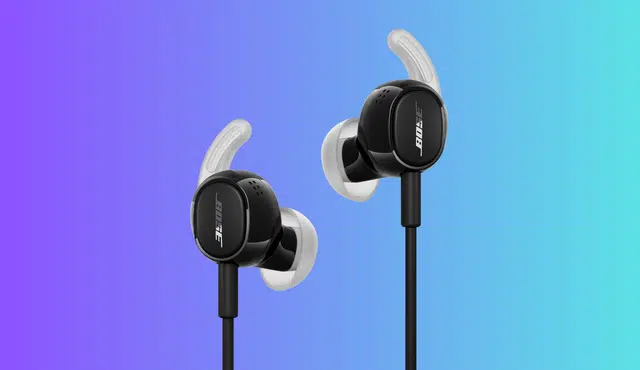
Bose just answered a question a lot of shoppers have been asking quietly: can you get real noise canceling without a battery to babysit? The new Bose Noise Cancelling Wired Earbuds cost $99, plug straight into a USB-C phone, tablet, or laptop, and turn on active noise cancellation the moment they’re connected, according to Bose’s own launch announcement.
If you’re using an older pair of wired or wireless earbuds and want ANC without the charging routine, the Bose Noise Cancelling Wired Earbuds at $99 are worth considering, especially if you can sell your current pair to offset the cost.
That second part matters. Trading up isn’t free money, but the earbuds or headphones sitting in your drawer right now still have resale value. Before you decide whether to buy in, it helps to know exactly what you’re getting, what it’s replacing, and what your old gear might fetch first.
What Do Bose's $99 Wired Earbuds Offer?
The Bose Noise Cancelling Wired Earbuds connect over USB-C, draw power from whatever device they’re plugged into, and skip Bluetooth pairing entirely. They ship in Black, White Smoke, and a limited-edition Dewdrop Mint, arriving October 15 after preorders opened September 28 at Bose.com and Best Buy, according to Bose’s press release.
How Does USB-C Noise Cancellation Work Without Charging?
Active noise cancellation normally needs a battery, but Bose built these earbuds to pull power directly from the connected device instead. Four microphones, two per earbud, run Bose’s QuietControl system continuously while you’re plugged in, so there’s no separate charge cycle to manage, as described in Bose’s product announcement.
The earbuds use the USB Audio Class 2 protocol, accepting any sample or bit rate at the source while outputting at 24-bit/48kHz for lossless playback. A hands-on account from CNET found the noise canceling effective at tamping down city noise, though it rated performance “a B-plus” and noted it falls short of Bose’s QuietComfort Earbuds Ultra (2nd Gen) wired earbuds review, which uses four microphones per earbud instead of four total.
What Do Quiet, Aware, and ANC Off Modes Do?
Three modes cover most listening situations. Quiet Mode turns on active noise cancellation to block outside sound, Aware Mode lets ambient noise through so you stay alert to your surroundings, and ANC Off Mode gives you plain wired audio with no processing, based on Bose’s official specifications.
You cycle through the modes using the inline remote, which also handles volume and playback. A dedicated microphone sits on the back of the remote for calls, positioned to cut down on clothing noise without needing to hold it close to your mouth.
Who Benefits Most from Wired Listening?
Anyone tired of charging earbuds fits the profile Bose is targeting here. Wired headphone sales climbed 10% in the back half of 2025 and 20% at the start of 2026, a trend driven largely by younger buyers, according to Wired’s reporting on the wired audio comeback.
Frequent video callers, gamers, and commuters who dislike Bluetooth latency also gain from the direct wired connection, since it eliminates the lag that can throw off lip-sync on video or timing in games. Anyone still using a phone with only a Lightning port needs a different solution, since the earbuds require a powered USB-C connection and can’t run through a standard adapter, as noted in Mashable’s launch coverage.
When Can You Buy Them?
Preorders are open now through Bose.com and Best Buy, with general availability starting October 15, confirmed in Bose’s official announcement. The earbuds come with a 4.2-foot cable, three eartip sizes, two stability wing sizes, an IPX4 water resistance rating, and a zippered carry case.
Should You Sell Your Current Headphones to Switch?

Selling your current pair before buying the Bose earbuds can turn a $99 purchase into a much smaller out-of-pocket cost. Whether that math works depends on what you’re using now and what condition it’s in.
How Do They Compare with Other Options Near $99?
The Bose Noise Cancelling Wired Earbuds sit in a small category: wired, USB-C, and genuinely noise-canceling. Apple’s standard EarPods (USB-C) cost $19 but don’t include active noise cancellation, so they solve a different problem than the Bose pair, based on CNET’s comparison of USB-C wired earbuds.
Sony’s IER-NW500N wired ANC earbuds are another option in the wired ANC space, though current pricing and availability weren’t confirmed in the research for this piece, so treat that model as one to check directly with Sony or a retailer before comparing costs. Belkin’s $30 SoundForm ANC Wired Earbuds also claim noise cancellation, but CNET described the effect as “pretty underwhelming” next to the Bose pair’s performance.
Model | Price | Connection | ANC | Charging Needed |
Bose Noise Cancelling Wired Earbuds | $99 | USB-C wired | Yes | No |
Apple EarPods (USB-C) | $19 | USB-C wired | No | No |
Belkin SoundForm ANC Wired | $30 | Wired | Yes (limited) | No |
Bose QuietComfort Earbuds (wireless) | $150 | Bluetooth | Yes | Yes |
Bose’s own wireless ANC lineup starts at $179, and Apple’s ANC AirPods 5 start at $129, which puts the $99 wired pair meaningfully below both, according to Mashable’s hands-on impressions.
What Are Your Old Earbuds Worth Right Now?
Resale value depends heavily on model and condition, and Bose’s own trade-in program offers a general benchmark: up to $100 credit for earbuds and up to $150 credit for headphones when traded toward a new purchase, per Bose’s trade-in program terms. That credit only applies toward a new Bose purchase, though, and trade-in items are not returned if you change your mind.
If you’re not committed to buying another Bose product, selling for cash through a third-party buyback service gives you more flexibility. Popular models like AirPods Pro 2, Sony WF-1000XM5, and Bose QuietComfort Earbuds all hold resale demand, though exact payouts vary by platform, condition, and included accessories.
What Would the Upgrade Cost After Resale?
Subtracting a trade-in or resale payout from the $99 price tag is the simplest way to see if switching makes sense. If your current earbuds are in good working condition with original accessories, the after-resale cost of the Bose pair could land well under $99, though the final number depends entirely on what buyback offer you receive for your specific model and condition.
Earbuds with battery issues, missing charging cases, or heavy cosmetic wear typically fetch less, so factor that in before assuming a specific dollar amount. Getting an actual quote for your model is the only way to know your real number.
How Can You Sell Earbuds or Headphones Through Gizmogo?
Gizmogo lets you get a quote for your used earbuds or headphones in a few minutes, without needing to trade toward a specific new product first. You enter your device’s brand and model, describe its condition, and receive a price offer, then ship it in using a prepaid label.
This works whether you’re parting with Bose QuietComfort Earbuds, an older Bose QuietComfort Earbuds II, a set of Sony WF-1000XM4 noise canceling earbuds, or AirPods 4. Gizmogo also accepts Bose QuietComfort headphones and models from other brands not listed individually on the site.
The payout is a quoted offer based on your device’s condition, not a guaranteed fixed price, so check the estimate for your exact model before shipping anything. Selling this way ahead of October 15 gives you cash in hand before the new Bose wired earbuds hit doorsteps, whether or not you end up buying them.
Conclusion
The Bose Noise Cancelling Wired Earbuds bring genuine active noise cancellation to a wired, USB-C connection for $99, undercutting Bose’s own wireless ANC lineup and Apple’s ANC AirPods on price. They suit anyone who wants to skip charging and pairing without giving up noise blocking, though the cable itself is a trade-off some buyers won’t want to make.
Checking what your current earbuds or headphones are worth before you buy is a simple way to lower the real cost of switching. A quick quote through a buyback service tells you your actual number, rather than a rough guess.