

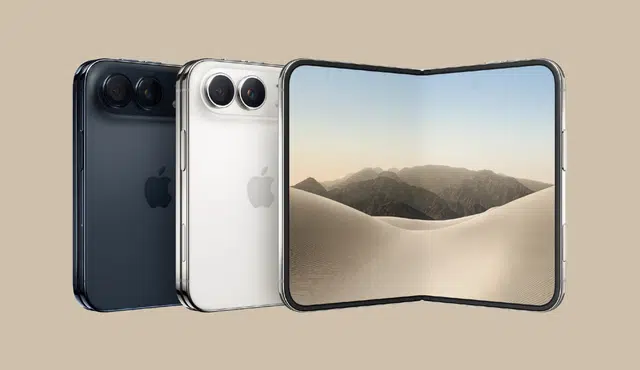
Apple’s first foldable iPhone just reset the resale clock for every iPhone in circulation. The moment a new flagship ships, the used-phone market repriced every earlier model downward, and the size of that discount grows the longer you wait to sell. If you’re holding an iPhone 14, 15, 16, or 17 and weighing whether to fund an upgrade, the math around timing matters as much as the phone you’re eyeing next.
This is a resale-value problem before it’s a hardware decision. Apple’s trade-in credit, carrier bill credits, and cash buyback offers all move at different speeds after a launch, and the gap between the best and worst option can run into hundreds of dollars. Selling smart means understanding what your current iPhone is worth right now, not what it was worth last month.
What the iPhone Duo Means for Upgraders
The iPhone Duo is Apple’s first foldable phone, and its arrival signals the kind of platform shift that tends to accelerate trade-ins across every older iPhone model. It carries a $1,999 starting price, a 7.6-inch inner display, and an A20 Pro chip, positioning it well above the standard flagship tier, according to Apple’s official product page.
What Is the iPhone Duo?
Closed, the iPhone Duo’s 5.4-inch outer display covers more than 90 percent of the screen area on an iPhone 18 Pro, according to WhistleOut’s breakdown of Apple’s foldable. Opened, it offers the largest display Apple has ever shipped on an iPhone, paired with a 48MP Dual Fusion camera system and a redesigned version of iOS built for dual screens, as detailed in Apple’s newsroom announcement. It’s a passport-shaped device that folds down to something pocketable, per specs compiled by Memeburn.
Who Is the iPhone Duo Best For?
The Duo suits buyers who want a larger canvas for multitasking, reading, and media without carrying a tablet, and who don’t blink at a $1,999 entry price. It’s a harder sell for anyone stepping up from a base iPhone 17, since the price jump is steep relative to the everyday utility gain, a point raised in Ars Technica’s launch coverage. Buyers already sitting on a Pro-tier phone will feel the format shift more than buyers coming from an entry-level model.
Why It Could Trigger a Major iPhone Upgrade Cycle
A genuinely new form factor tends to pull in buyers who’ve sat out several annual refreshes, since a folding screen feels like more of a leap than an incremental camera or chip bump. That matters for your resale timeline: more people listing old iPhones at once puts extra downward pressure on used prices, on top of the usual post-launch dip. If you’re planning to sell an older model to help fund a Duo or an iPhone 18 Pro upgrade, you’re competing with a bigger wave of sellers than a typical September.
Why Selling Before the Launch Window Closes Matters
Selling before a new iPhone launch typically nets more money than waiting, because resale prices drop as soon as a replacement model arrives on the market. The pattern repeats every year, and the iPhone Duo launch is no exception.
How New iPhone Releases Push Down Used-Phone Prices
Every new Apple launch resets the resale market within days. The iPhone 16 lost around 20% of its trade-in value the moment the iPhone 17 launched, which cost sellers up to $150 if they waited, according to UNILAD Tech’s reporting on trade-in timing. Apple’s own trade-in credits already reflect this: instant credit for an iPhone 13 or later ranges from $175 to $885, and payouts dropped again on September 9, per MacObserver’s trade-in analysis.
Why Waiting a Few Weeks Can Reduce Your Payout
Selling two to three weeks before Apple announces a new model typically produces the best payout, and holding past that window works against you, as outlined in Gizmogo’s guide to launch-timing strategy. Timing a sale around Apple and Samsung release calendars can add $50 to $150 to your payout compared to selling after the fact, according to timing research. Once a new model like the Duo ships, your current iPhone is instantly perceived as one generation further from current, which is exactly the perception that moves offers down.
When an iPhone 18 Pro Upgrade May Make More Financial Sense
If your goal is a new phone rather than a foldable, the iPhone 18 Pro is the more conventional and often more cost-effective upgrade path, since it doesn’t carry the Duo’s $1,999 starting price. Waiting 18 to 24 months from your purchase date before selling is generally the sweet spot, giving you 30-40% of the original value while still getting real use out of the device, per. If you’re closer to that window now, selling ahead of Duo-driven demand shifts and putting the proceeds toward an 18 Pro instead of a foldable can be the more grounded financial move.
Estimated Resale Value by iPhone Model
Resale values fall fastest in the weeks right after a new iPhone launches, and the size of the drop scales with how many generations separate your phone from the newest model. Every tier below follows the same basic shape: a stable or slightly rising price before launch, and a step down once the Duo and iPhone 18 Pro are officially available.
iPhone 17 Series Value Before and After Launch
The iPhone 17 series holds the strongest resale position of the group, since it’s now one generation removed from current rather than two or three. Values on current-generation phones tend to soften modestly, not collapse, right after a new flagship ships, since the 17 series remains a fully modern phone with recent specs. Sellers who move within the pre-launch window still capture the top of that range before broader Duo-driven listings increase competition.
iPhone 16 Series Value Before and After Launch
The iPhone 16 series faces a sharper adjustment, based on the pattern seen when the iPhone 17 displaced it: about a 20% trade-in value drop and up to $150 in lost payout for sellers who waited past launch, according to UNILAD Tech. Expect a comparable dip once Duo-era demand fully settles in in favor of newer models.
iPhone 15 Series Value Before and After Launch
The iPhone 15 series shows how trade-in credit and open-market cash can diverge. Used iPhone 15 units were selling for about $550 on average in early 2026, while Apple’s trade-in credit for the same phone sat closer to $450 even with a promotional bonus applied, per Gizmogo’s hidden-costs analysis. That $100 gap illustrates why checking cash offers before defaulting to trade-in credit is worth the extra few minutes.
iPhone 14 Series Value Before and After Launch
The iPhone 14 series sits furthest from current and depreciates the fastest in raw dollar terms, though it retains real cash value if sold before it’s viewed as three generations old. Phones in this range typically land in the 30-40% of original value bracket once they’ve been held 18 to 24 months, per Duo-driven upgrade wave only accelerates that decline for anyone who delays.
Sell for Cash or Use a Trade-In Credit?
Cash sales generally beat trade-in credit in raw dollar terms, but trade-in credit offers speed and simplicity that cash sales can’t always match. The right choice depends on how much the dollar gap matters to you versus how much friction you’re willing to tolerate.
How Apple Trade In Compares With a Cash Sale
Apple credits $175 to $885 instantly toward a new device for an eligible iPhone 13 or later, according to MacObserver, and that credit only applies toward Apple purchases. Trade-in programs tend to pay less overall because the receiving company has to account for resale or recycling margins, and they typically offer nothing for non-functional devices. Cash sales, by contrast, pay for a functional device directly with no purchase requirement attached.
Why Carrier Promotions Are Not Always the Highest Offer
Carrier trade-in deals often look generous on paper because they’re spread across monthly bill credits tied to a new line or upgrade plan. That structure means the value is locked to staying with that carrier for the full credit period, and canceling early typically forfeits the remaining credit. A straightforward cash offer or Apple’s instant credit doesn’t carry that same lock-in risk.
How to Calculate Your True Net Return
Your real payout is the quoted price minus fees, shipping costs, the time spent handling buyer disputes, and any restrictions attached to how the money can be spent. Defaulting to convenience-based trade-in options costs sellers $100 to $300 in lost value compared to shopping the offer around, according to Underpriced.app’s trade-in versus resale analysis. Third-party buyback platforms deliver 12-28% more liquid cash than carrier or manufacturer trade-in programs in many cases, often within five business days.
Option | Payout Speed | Value Type | Flexibility |
Apple Trade In | Instant | Store credit, $175-$885 | Apple purchases only |
Carrier Promotion | Spread over months | Bill credits | Tied to carrier plan |
Cash Buyback | Days | Direct cash | Usable anywhere |
What Affects the Offer You Receive
Condition, battery health, storage tier, and carrier lock status are the four biggest levers on any iPhone offer. Buyers and trade-in programs price all four independently, so a single weak factor, like a locked carrier status, can pull down an otherwise strong offer.
Condition, Cracks, and Water Damage
A cracked screen, dented frame, or any sign of water exposure reduces an offer sharply, and trade-in programs frequently pay nothing for non-functional devices. Cosmetic wear matters less than functional damage: a scuffed back glass costs you far less than a cracked display or a phone that won’t power on.
Battery Health, Storage, and Carrier Status
Battery health below roughly 85% typically triggers a lower grade from most buyback services, since replacement cost gets factored into the offer. Higher storage tiers command a real premium, since storage capacity has a measurable effect on resale value independent of the phone’s age or condition.
Why Unlocked Phones Usually Command More Money
An unlocked iPhone sells to a wider buyer pool, since it works on any compatible carrier without an activation restriction. Carrier-locked phones, particularly those still financed or tied to an installment plan, often get rejected outright by cash buyers until the balance is cleared.
Turn Your Current iPhone Into Cash Before It Loses More Value
Getting cash for your iPhone starts with a proper wipe and ends with picking a buyer that pays for your phone’s actual condition instead of a generic estimate. Handled correctly, the process takes under an hour of prep work and a few days of shipping time.
How to Prepare an iPhone for Sale Securely
Back up your data, sign out of iCloud, and turn off Find My iPhone before listing your device anywhere. Then perform a factory reset to erase your data completely, since a locked or associated device is worth nothing to a buyer regardless of its physical condition. A pre-sale checklist covering these steps helps make sure nothing gets missed before you ship.
Why Gizmogo Is a Fast Option for Any iPhone Condition
Gizmogo pays cash for iPhones in any condition, including cracked screens and battery issues, without requiring a trade-in toward a new purchase. You get a quote based on your model, storage, and condition, ship the device for free, and get paid without waiting on a carrier billing cycle. For sellers weighing turning old iPhones into cash against a slower trade-in path, a direct cash sale settles the question in days rather than months.
Conclusion
The iPhone Duo’s launch marks the start of a resale window that narrows fast, and every week you wait puts your old iPhone one step closer to a lower offer. The 17 series holds value best right now, the 16 and 15 series face the sharpest near-term drops, and the 14 series depreciates fastest in dollar terms the longer it sits unsold.
Trade-in credit from Apple pays instantly but locks your value to a new purchase, while cash sales through platforms like Gizmogo pay more in most comparisons and put money in your account with no strings attached. Checking your model’s condition, battery health, and storage against current offers before you commit to any single channel is the difference between an average payout and the best one available to you today.